I’m lying on a sun lounger mourning my lost youth

It’s summer 2019 and I’m lying on a lounger staring at a Cretan sea. Around me the beach life thrums. Fit boys and girls bop to a tinny pop tune. I’m pretending to read but tears pool behind my shades.

I should be HAPPY. We’re away, we’re together, others are less lucky… I berate myself between chugs of tepid water. An adonis comes for the sun bed fee – I mumble in Greek except he’s looking anywhere but here.

I am HOT – must be 90 degrees. Sweat pools at my back and belly. I’ve no patience for sunning and I need a wee. I’m trying to ignore the thought of strangers melting on this bed before me. I reach for the suncream.

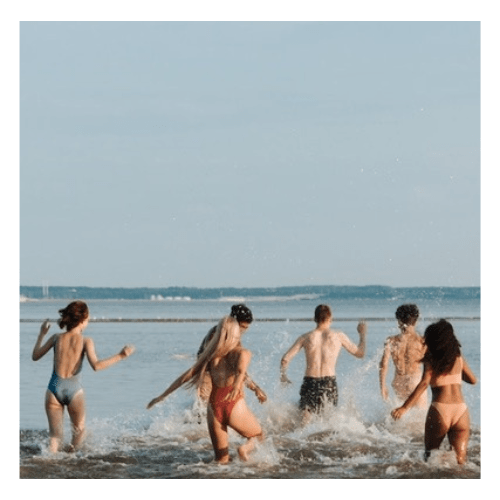
Bronzed girls run past, a whirl of giggles, their barely there swimsuits struggling to hold onto curves. I suck my tummy in, hide myself beneath a bikini past it’s prime.
What is WRONG with me? I try to breathe it out. But I’m buttoned up tight; I feel invisible. I want to shout, at the top of my lungs, “I’m still here!!” Instead, I reread the same line.

Once I was an English rose. My fairness drew compliments like confetti, “Meryl Streep!” they’d fawn. But (oh the irony) I thought I was ‘ugly.’ They say “The youth is wasted on the young,” and they’d be right.

Only now, looking back at old snaps, I see my beauty. How I missed the chance to flaunt it – the nectar to bee pull of it. My firm, line-free skin taunts me from history – “Look how you shone!”

Is it true? Am I passed it? Or am I stewing in self pity. A midlife meltdown maybe? I’ll buy a sports car, dye my hair, surrender to the needle, anything to banish this creeping age.

And then she arrives, a goddess in green, grey hair piled high, movie star shades – smoothing a sarong over lounger. She is magnificent. The beach takes a breath, as she lays down.

Catlike she preens, people pause, lips loosening. But she gives no f*cks about onlookers. Instead, she eyes the ocean like a hungry mermaid. And then she stands. People sly peek over papers as she strides to the sea.

Then from nowhere, a singsong voice and water sprinkles, “Mummy! Come on!” And he’s pulling me out of my malaise. Tugging me free of thoughts, as we hot foot over stones to the waters edge.

And so we dive – the cool steals my breath. In that moment I am happy. I look for the lady in green but she is far away, powering towards horizon. I lie back in the water, my ears submerge and beach hum fades. Finally I’m at peace – at peace with myself.


For the love of libraries

In Exeter Central Library in the ‘80s there was a rocking horse. It sat in the children’s section, regal in its chestnut glory. I waved as I rode to save the fairy kingdom. Later I would thumb through musty picture books. I remember the pleasure of choosing, of lugging my favourites to the desk. The librarian would smile as she stamped return dates inside. Then we’d leave hand in hand, taking the libraries looping path to the city below.

I believe that libraries are one of life’s greatest gifts. Whatever your wealth you can sign up and dig into their treasures. This is socialism in action, the equity of knowledge – of escape through books. The pleasure of reading has followed me from child to adult. Yet a national decline in children reading for pleasure is a trend we should all be worried about.

It is equally shocking to learn that the last 10 years has seen the closure of a fifth of UK libraries. This has worked against librarians advocacy for the joy of reading. On top, the Chartered Institute of Public Finance and Accountancy (CIPFA) highlights a 29.6% reduction in national library spend. Whilst the government blames local decision-makers and vice versa, the public are losing out.

With over a quarter of a million pupils facing literacy poverty and 7.1 million adults struggling to read you’d think this would be a national crisis. But the ‘powers that be’ seem unfazed. Maybe it suits them to leave it this way. Who needs an educated populace challenging the status quo.

But libraries aren’t just places of learning, they are refuges too. Their warmth draws the weary and lonely, the troubled and displaced. They provide a meeting place, a safe space through challenging times.

How many if us know about the 1850’s Public Libraries Act? This pivot point in English social history was driven by reformers and philanthropists. Shoot forward 170 years and we barely celebrate this landmark moment. In our hi-tech, consumer world we’re more likely to order books online than trudge to the library. Yet the libraries social value is as important today as it ever was – maybe more so.

When life gets hard and our pockets empty we can go to the library and get lost in a book. This cost-free ability to escape, to learn and takeaway must not be taken for granted.

We must stand up for our libraries at this critical time. These houses of knowledge need us to shout loud. Above all we must speak up for the less fortunate, the folk that depend on them – for community and hope.

“But libraries are about freedom. Freedom to read, freedom of ideas, freedom of communication. They are about education (which is not a process that finishes the day we leave school or university), about entertainment, about making safe spaces, and about access to information.”

Neil Gaiman, Writer (extracted from a lecture for The Reading Agency 2013

Oh middle age blues

How did I get here this near half of 90? This middle age, mid-life, midway. How do I feel when I look in the mirror; lines feather eyes, the upturn of mouth.

Society idolises the beauty of youth. Airbrushed Venus’ pout from our screens. We fight the years – buy pills and potions for fear of the ‘after.’

Middle age taunts us like a laughing clown. We run from its mirth to plough pool and pound pavement. We fight the loosening of skin that we poured into lycra.

As milestone birthdays pass it’s easy to fall into the slough. From experience, dodge the photo album’s lure – this only leads to weeping over wine.

At this middle age we can either hark back or look forward. It’s a moment to choose a cup half full versus empty. But its tempting to dwell in self pity, on the beach, in my mumsuit as bronzed nymphs breeze by – oh!

Yet we can’t turn back time. There’s still life to live. Those younger years weren’t all halcyon. My skin was smoother but insecurities hung like the beads around my neck.

I’m beginning to see that in ageing we lose and we gain. In accepting ourselves right here, right now we can start to reframe. We can map a new path.

For there’s strength in my life experience. There’s beauty in the evidence I have laughed. There’s a power in my self-knowledge – in the history that I own.

Middle age, indeed any age is bitter sweet. But life is there for living every day. It’s what we choose to do with it that counts. So I’m hanging up my hang ups. I’m saying bye bye to yesterday. I’m running towards the future with hope in my heart.

The memory of touch

I have a memory of a cool banister, under my hand. The ridges of wallpaper, at the top of the stair. The tiled sills, cool to touch. The good sofa, smooth with piped edges. The stones in the box, inlaid with shell. The click of the light – on / off.

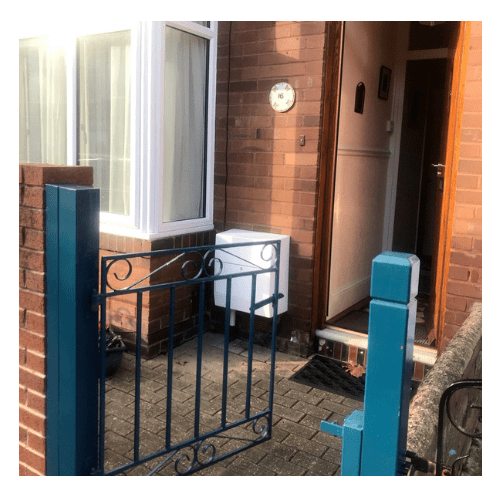
I am awake-dreaming. I am recalling the memory of a red brick house which was once my home. This remembrance is not just in my head – its trace flows to the tips of my fingers.

What magic is this? How can I recall these nooks of a place, 12 years on? It seems our sense of touch or haptic memory is more enduring than first realised.

Studies suggest that, moments of touch – the memory of an object – it’s dimensions and texture, can last long after that point of contact.

This fascinates me. As humans we hold onto certain memories like a raft sometimes. Whilst remembrance can be selective, looking back can help us understand our past and face our futures.

In a year when we’ve been kept from loved ones, it makes sense for us to hark back. Covid has raised our present and past senses. At times, a flood of feeling has knocked us sideways. Maybe this is catharsis of sorts? Out of control, we’re anchored by memory points; our nostalgia soothes us.

Then I get to thinking, what of those fallen by dementia? The loss of memory in times like these is all the more cruel. The half familiar faces crowding at the door way, unable to come close.

Whilst true, haptic memory is more elusive in dementia patients, scientists have found peripheral tactile stimulation impacts visual and verbal memory. It seems that ‘touch’ remains a powerful, enriching sense.

So, my retracing of steps makes all the more sense right now. Whatever our state of health or mind, the anchors of memory can hold us.

I have a memory of a cool banister, under my hand. The ridges of wallpaper, at the top of the stair. I visit there from time to time, it reminds me of where I come from.

The forest is my happy place

As I walk through the forest I feel myself unfurl. The path is strewn with pine cones – I pick one up, press it to my palm.

Ahead, my son hollers as he spars invisible knights. The dog plods by my side, nosing the leaves for something edible. He’s always hungry, unfazed by old age spread.

I’m hungry too but not for food. It’s the green I crave. I synch my breath with my tread; my lungs fill with loamy air. It’s as if the forest heals. The trees reach to me, like the arms of a mother.

These days I’m tightly wound. I bid myself to relax. Yet the months that lie behind have taken their toll. I move with a coil inside me. My husband watches, he knows the signs – the anxious tick.

Rain falls through the forest leaves. We are in no rush. Instead we turn our faces upwards. My son opens his mouth to catch a taste: “God is crying mummy.” I’m not sure where this religion comes from. I am a heathen, still unchristened at 44.

We come to a clearing and standing stones – a Druid’s dell. We move in between granite columns and altar. It is a spiritual place. We sit a while, taking in the ancient view.

Then we discover the plaque – it is a folly built for wealthy men. Maybe the ‘sirs’ wore robes and prayed to the moon. We imagine them there, in the fading light.

No matter, it is still magical. We are happy that we found this place. Damp discoverers, we trudge back to the car. I still hold the pine cone in my hand. My lungs still full of forest air, my heart is happy.

Remembering to breathe

It’s easy to forget to breathe. Too often, we plough through, riding the worry wave. This year has brought us to the crest more than once. The UK’s Office for National Statistics says that coronavirus has impacted on our wellbeing – no real surprise there.

Isolation, relationship strife, curbed freedoms – it’s unsurprising that we’ve felt tense. For those of us at high risk, disabled or living alone, lockdown can be endless. In 2020, a rise in mental health issues has been seen globally.

These days, we have become masked, antibac crusaders, twitching at a close-to cough. It’s no wonder our heads are in a spin. Learning how to manage our stress has become a daily necessity.

It makes sense that meditation and mindfulness app usage has surged this year. I am a convert to Insight Timer but the well-being market is full of options. Ten minutes a day has helped me through dark moments. Relearning to breathe has been a revelation.

I’ve been surprised at how often I forget to truly breathe. How I move, shallow breathed through my days. If only I’d learnt the art earlier; I could have skipped some teenage angst!

Mindfulness, coupled with yoga has given me new life tools. Adriene Mishler has been my guide here. Her warm and natural style has coaxed me through flows that have set me right.

It’s ironic that, out of a shitty year I have become better at looking after myself. Oddly, I have coronavirus to thank for that. At first, self care was about survival. Now, as I look to autumn, I face uncertainty with a little less fear. If anxiety builds, I can return to the rhythm of my breath.

“Breathing in. I calm my body and mind. Breathing out. I smile. Dwelling in the present moment. The only moment.”

Thich Nhat Hanh

Poetry saved me from the dark

It’s 2013 I’m the mother of a newborn – a longed for child. I live with my husband in a red brick house in a estuary city at the end of the line.

The baby is beautiful, a healthy little boy. We name him after our Irish roots. He arrived in a blur of pain plucked from water, by a kind midwife.

Parenthood was a mystery at first – the baby manual no damn use. A colicky, fretful boy pushed us to our limits. Irritation buzzed like a pesky bee. We wrestled for the crown of most hard done by.

A health scare, on top of scant sleep, chipped away at me. My husband was kind, yet he couldn’t stop me from falling. The wise Dr packed me off with pills and counselling.

One wakeful night, I couldn’t switch off my brain. Cross words had cut the evening short. Absently, I reached for my phone, it’s lights luring me back.

In that moment, I was drawn to the notes section. From nowhere, I started to write and write. Words flew from me – a poem of sorts. As I wrote, I started to relax – emotions emptying into night.

That was the start of my writing journey. From there on in, I typed as I went about my days. On the bus into town, in between feeds and during baby naps. It was like someone had flicked a switch in me. Some poems were angry, some sad, others funny and joyful too. It was like I’d rediscovered myself, shook a part of me free.

When we become parents, we do not realise what we trade for the privilege. The love you feel for your child is endless. Yet as parents, we must love ourselves too. I have learnt that, in order to find my balance, to be a better mum, I must make time to write. This outlet has been my saviour, pulling me back from dark places – helping me feel whole.

The yearning for home

One of my favourite words is nostalgia. Apart from the way it rolls off the tongue, its meaning moves me. Gifted to us by the Greeks, it’s no accident that it is born from the words nostos (return home) and algos (pain).

This longing for home, for past times and loved ones, has never been stronger than this year. This strange, topsy turvy year, which has ripped the rug from under us. Who knew, when we toasted the first of January, our resolutions would unravel before the Easter Bunny came.

Suddenly, we were hemmed within four walls, if we were lucky to have a place to be. Coronavirus, that peculiar word, filled our ears and mouths. When we should’ve been planning for holidays, we were watching for symptoms.

But, harder than than the cabin fever, the home-school and zoom fatigue, was the separation. The inability to go to people and places that made you feel whole. As you pine, Boris says “stay put!”

The weeks turn into months. As you struggle with home-work-school-work de ja vu, you start to remember. You revisit the unlikeliest memories; nostalgia sweeps you up.

You are walking home from Ladysmith School, for macaroni with a crispy top. You are listening to your mother sing, her voice loops in the air. You are riding on your father’s shoulders, it is green all around. You are tracing the curves of an old violin, its head is a handsome lion. You wash potatoes in the sink with granny, she smells of soap. You dance with your sister, the fire dances too.

Memories flood you like a wave, pulling tears from inside. The emotion is bittersweet, like sherbet, sucked on a journey home. There is pain in the return, yet it reminds you who you are.

Back in the corona cabin, you hanker for a hug, from those that have known you forever. Instead, you are forced to wait, retracing the memory groove. These roots are stronger in middle age. Your 40 something heart, yearning for that Devon air, the red earth beneath your feet.

Then, a voice pulls you back, a holler from downstairs, “Mummy, I’m hungry!” You shake yourself present, return to the now, to beans on toast and cartoons, the dog snoring beside you.